The Dabliu Ecosystem: multilingual support embedded in everyday learning
Linguistic diversity in U.S. schools has reached a structural scale, making multilingual support a core educational requirement rather than a peripheral one.
According to recent data from the National Center for Education Statistics (NCES), over 5 million K–12 students (approximately 11% of total enrollment) are classified as English Learners (ELs), a figure that has remained consistently high through 2024–2025. At the same time, schools report hundreds of distinct home languages spoken nationwide, reflecting long-term demographic shifts rather than temporary migration patterns (NCES, 2024; U.S. Census Bureau, 2023).
This diversity is not new. What remains unresolved, however, is how school systems support it -consistently, equitably, and at scale.
WHY DOES THIS GAP PERSIST?
Independent federal and large-scale education research points to three recurring challenges:
• Instructional preparedness
First, instructional readiness remains uneven. A 2024 review by the U.S. Government Accountability Office (GAO) found that many districts continue to report insufficient preparation and ongoing support for teachers working with English Learners, especially in instructional strategies that integrate students’ home languages into everyday teaching. This gap is not about willingness, but about structural capacity and access to coherent tools (GAO, 2024).
• Family engagement
In parallel, family engagement remains a critical barrier. Data from the U.S. Census Bureau’s American Community Survey show that millions of U.S. households include school-aged children living with adults who have limited English proficiency. Schools serving these communities consistently report difficulties in maintaining effective, two-way communication when multilingual tools are fragmented or inconsistently applied (U.S. Census Bureau, 2023).
• Persistent opportunity gaps
Finally, academic outcomes continue to reflect systemic constraints. Assessment data from NAEP and NCES show persistent achievement gaps for English Learners, particularly in reading comprehension and access to grade-level content (NCES, 2024).
Across these areas, a common pattern emerges: support systems are fractured.
WHY FRAGMENTED TOOLS FALL SHORT
In practice, this fragmentation is often visible in the tools schools rely on daily. Many classrooms operate through a patchwork of solutions:
• One platform for instruction
• Separate applications for translation
• Different tools for collaboration, remote learning, and handwriting
• Limited or no offline continuity
As research reviewed by the GAO indicates, fragmented digital environments increase cognitive load for teachers and reduce instructional continuity for students (GAO, 2024). As a result, language support becomes an add-on rather than an integrated part of learning.
WHY AN ECOSYSTEM APPROACH MATTERS
By contrast, an ecosystem approach treats multilingual support - among other needs - as infrastructure, not an accessory.
In practice, this means:
• Translation happens inside learning activities
• Students remain engaged in real time, without switching tools
• Learning continues across devices, locations, and connectivity conditions
• Teachers work within a single, coherent environment
This principle - integration over accumulation - is increasingly recognized in large-scale education research as critical for equity and access in multilingual settings (OECD, 2023; GAO, 2024).
AN INTEGRATED MODEL FOR MULTILINGUAL LEARNING
Our Dabliu ecosystem was built precisely around this idea.
With Dabliu Notes at its core, it connects interactive displays and tablets into one continuous learning environment, with the optional possibility of integrating our smart writing system as well. As a result, lessons, notes, and real-time collaboration flow across tools without requiring educators or students to adapt to disconnected systems.
MULTILINGUAL SUPPORT EMBEDDED IN EVERYDAY LEARNING
Rather than isolating translation in separate applications, Dabliu Notes embeds multilingual functionality in real time into all core classroom activities:
• Note-taking (at school and at home) and whiteboard work support automatic language recognition and translation, enabling students to access content in their preferred language while remaining part of the same lesson.
• The streaming functionality for remote learning allows real-time translation of instructional text and spoken content, supporting synchronous participation for non-English speakers.
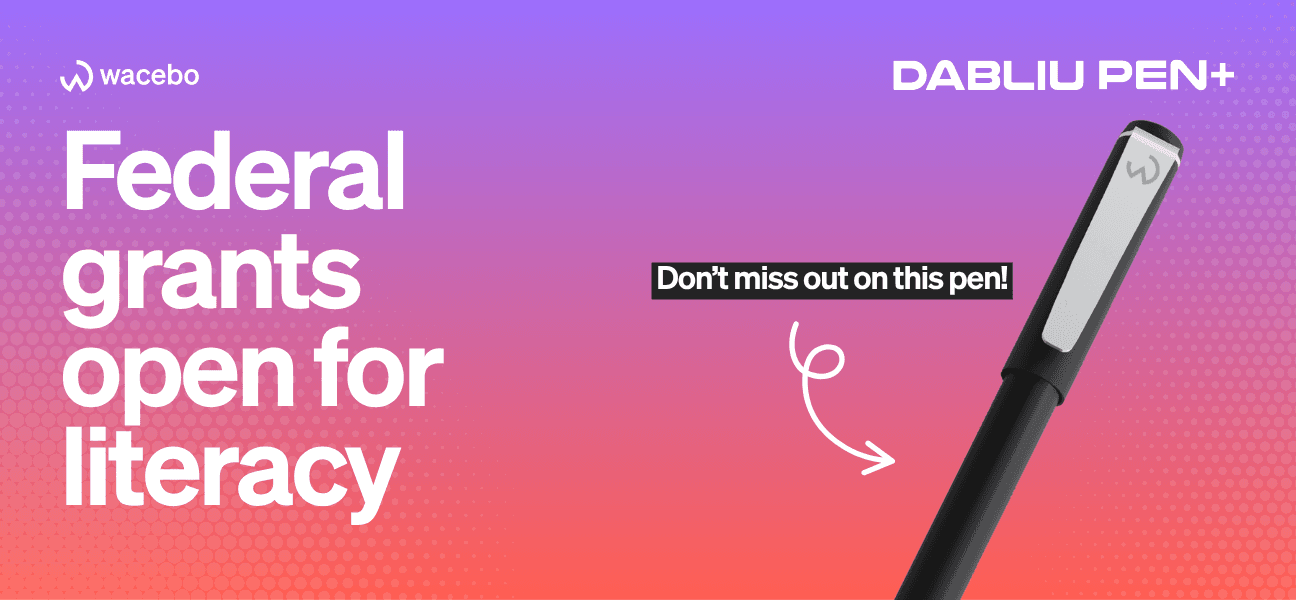
• Handwritten work, via our Dabliu Pen +, allows students to retain the benefits of handwriting on paper while their work is digitized and translated simultaneously, online or offline - supporting continuity and equity of access.
Overall, the Dabliu ecosystem was designed to reduce friction while emphasizing continuity, accessibility, and participation for every English Learner.
DESIGNED FOR REAL EDUCATIONAL CONDITIONS
In practical terms, our ecosystem is:
• Developed in-house, ensuring consistency, continuous scalability, and long-term support
• Compatible with third-party devices, protecting existing investments
• Offline-ready, a key equity requirement identified in recent federal analyses
• Collaborative by design, supporting shared and individual learning
• AI-enhanced, improving language recognition and workflow efficiency over time
FROM ACCOMODATION TO INCLUSION
Ultimately, large-scale data and independent analysis converge on a clear conclusion: English Learners benefit most when language support is integrated into instruction, not separated from it (NCES, 2024; GAO, 2024).
As multilingual classrooms continue to expand across the U.S., sustainable progress depends less on adding new tools and more on building coherent, connected systems, where language diversity is supported by design. In fact, when inclusion is treated not as an exception but as a foundation, education systems become stronger, more resilient, and better aligned with the realities of a global economy. Supporting multilingual learners, in this sense, is not only a matter of equity - it is an investment in the country’s long-term social and economic success.
Book a demo of our Dabliu ecosystem: sales@wacebousa.com
Get in touch